
Nonresident Taxation Platform
Enable proper taxation of cross-border digital services and expand the tax base through effective nonresident compliance management.
Book a demo
Lost revenue in the digital economy
Foreign companies can deliver digital services across borders without a physical presence in the countries where customers are located. This makes it difficult for tax authorities to identify taxable transactions and ensure compliance by non-resident providers.
As a result, governments lose tax revenue, domestic businesses face unfair competition, and regulators have limited visibility into cross-border digital activity. Without effective non-resident taxation mechanisms, an increasing share of the digital economy remains outside traditional tax administration.


Revenue loss from untaxed cross-border activity
Without proper taxation of nonresident companies, governments lose revenue from economic activity generated in their jurisdiction.
The OECD notes that digital business models can shift profits across borders, reducing taxable income where value is created. The IMF warns this weakens fiscal capacity and shifts tax burdens elsewhere.

Profit shifting and tax base erosion
Nonresident firms can exploit differences between tax systems to move profits to low-tax jurisdictions.
The BEPS work by the OECD shows this leads to erosion of national tax bases and unfair competition with domestic firms.

Weak transparency and enforcement
Limited taxation frameworks for nonresident companies reduce visibility over cross-border income flows.
The FATF highlights that weak ownership and reporting transparency makes it harder to track financial activity and enforce tax compliance.
The rapid growth of digital services and e-commerce has created new opportunities, but also significant challenges for authorities.
Many multinational corporations leverage complex international structures, transfer pricing arrangements, and profit-shifting mechanisms to reduce their effective tax burden. These practices contribute to the erosion of national tax bases and reduce governments' ability to collect taxes from economic activity occurring within their jurisdictions.
What is traceCORE Nonresident Taxation Platform?
traceCORE Nonresident Taxation Platform establishes a specialized digital framework for administering taxes on cross-border digital services supplied by foreign companies.
The platform enables tax authorities to implement destination-based taxation, ensuring that taxes are collected where digital services are consumed rather than where suppliers are located.

Efficient administration of tax collection obligations

Tax payment invoicing

Tax declaration filing

Simplified registration of foreign digital service suppliers

Prompt TIN assignment

Automated invoice generation
How does traceCORE Nonresident Taxation Platform work?

Simplified registration of foreign digital service suppliers:
- The foreign supplier registers remotely through the tax authority’s digital portal.
- The tax authority assigns a Tax Identification Number (TIN) to the foreign supplier.
- The foreign supplier uses the assigned TIN when issuing invoices to local customers and submitting transaction data for digital fee calculation and reporting.
Simplified taxpayer compliance
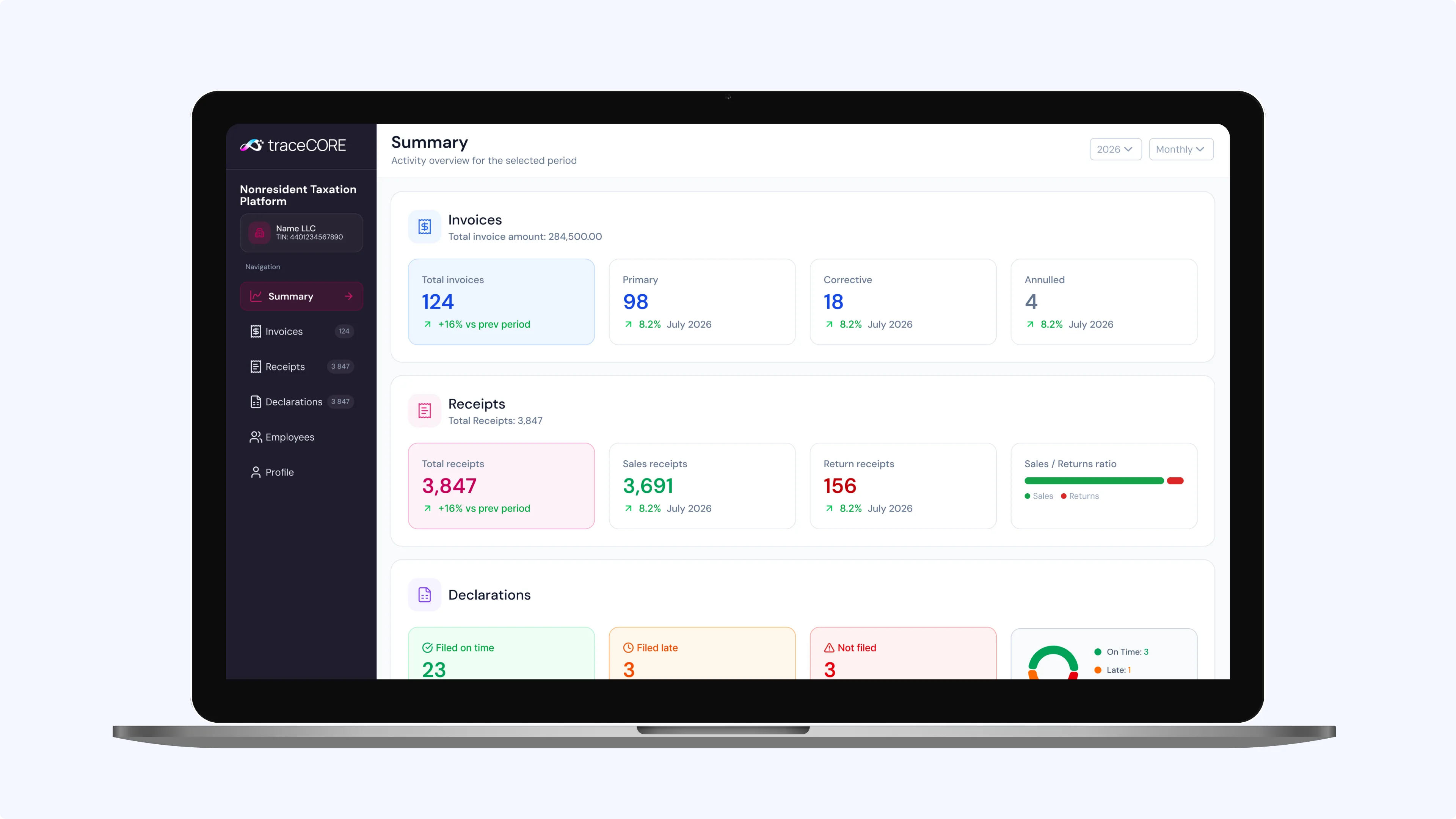
The platform provides nonresident digital service providers with a fully digital environment for meeting their tax obligations.
Suppliers can register remotely, obtain a tax identification number (TIN), submit electronic tax declarations, upload supporting documents, and monitor the status of filings and payments without visiting a tax office.
Automated validation, guided workflows, and integrated communication tools reduce administrative effort while improving reporting accuracy.
The streamlined process makes cross-border tax compliance faster, more transparent, and easier for both businesses and tax authorities.
Intelligent tax administration
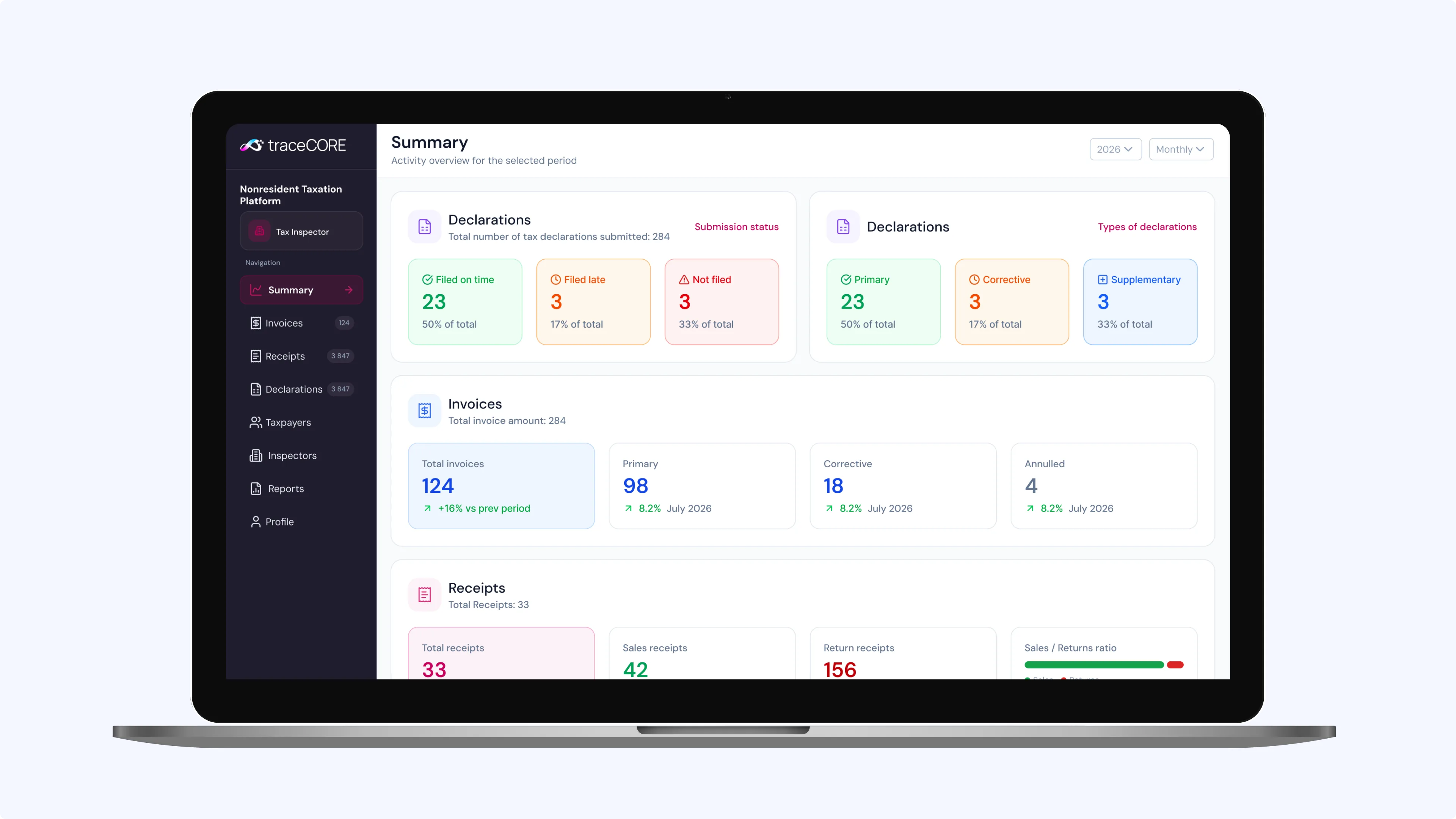
Tax authorities can efficiently administer taxes on cross-border digital services through a unified operational workspace.
The platform consolidates supplier registration data, tax declarations, and aggregated payment information, enabling authorities to review submissions, reconcile reported transactions, calculate tax liabilities, and identify inconsistencies automatically.
By automating reconciliation and compliance checks, the solution reduces manual processing, improves enforcement capabilities, and supports more accurate tax assessments across the entire administration process.
Real-time reporting and analytics
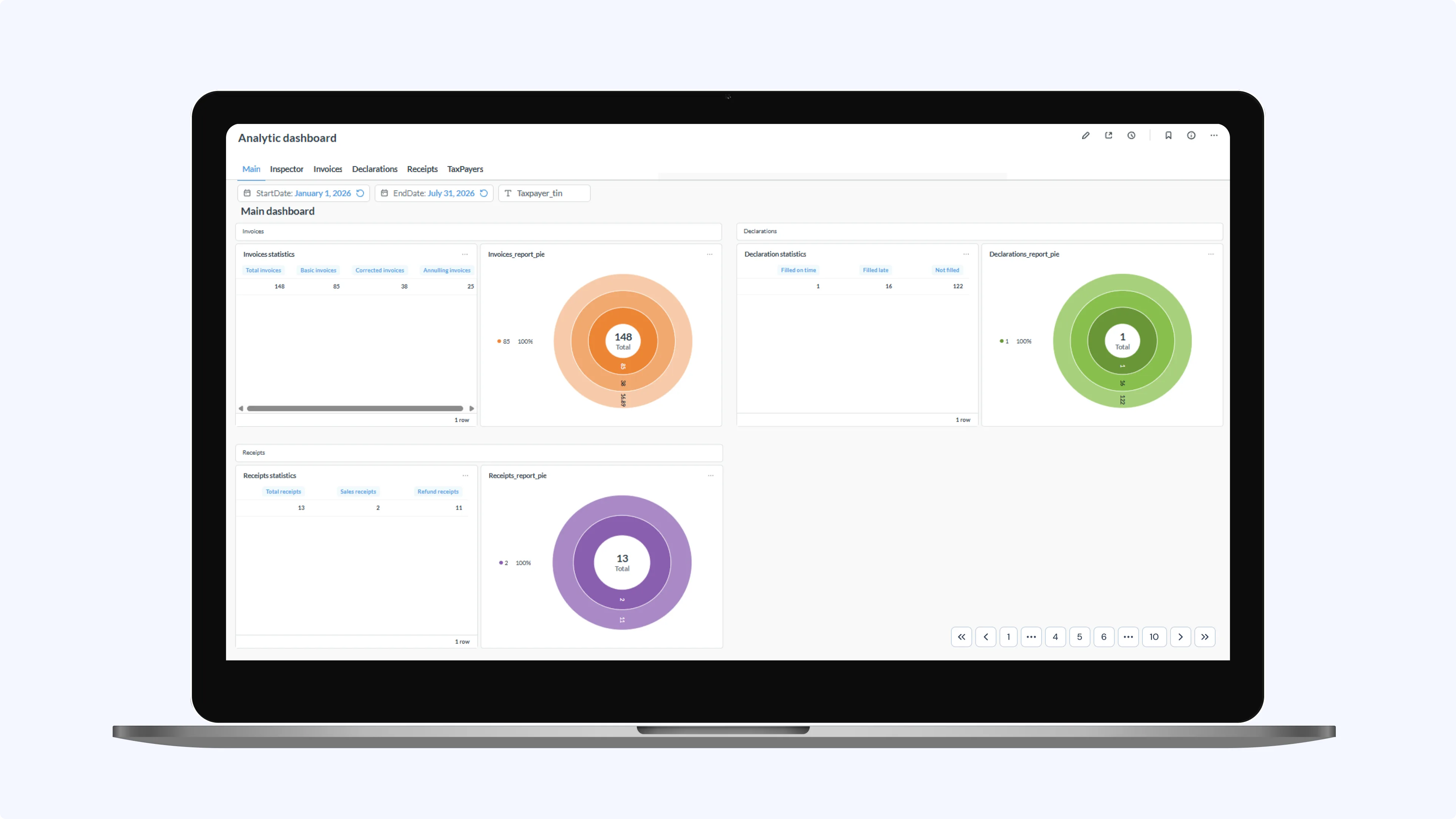
The platform delivers comprehensive visibility into tax collection and compliance through centralized reporting and analytics.
Authorities can monitor tax revenues, filing activity, payment status, compliance levels, and operational performance using real-time data from across the system.
Advanced analytics and audit capabilities help identify reporting anomalies, measure program effectiveness, and support evidence-based decision-making.
Centralized dashboards and reports provide a complete overview of platform operations while strengthening transparency and regulatory oversight.
Administration models

B2C transactions (foreign supplier → individual consumer)
The platform supports tax administration for digital services sold directly to consumers, including:
- Streaming services;
- Online gaming;
- Digital subscriptions;
- E-books and digital content;
- Software services.

B2B transactions (foreign supplier → domestic legal entity)
The platform supports administration of digital services provided to businesses, including:
- Cloud services;
- SaaS platforms;
- Advertising services;
- Digital marketplaces;
- Business software and subscriptions.
Key features

Digital registration of nonresident taxpayers
Foreign suppliers can complete registration and tax enrollment through fully digital workflows.

Place of consumption determination
The platform determines the tax jurisdiction based on payment data, transaction attributes, and consumption indicators to support destination-based taxation.

VAT and digital services tax administration
The solution supports tax declaration filing, tax calculation, tax assessment, reconciliation, and compliance monitoring.

Electronic invoice management
Generation and management of electronic invoices containing required tax information, including local tax identification numbers and tax line items.

Reporting and analytics
Comprehensive reporting capabilities provide operational, fiscal, and strategic insights into digital service taxation.

Payment agent integration
Seamless integration with payment organizations enables receipt of payment information and implementation of tax withholding models.
A win-win solution for all stakeholders
By enabling taxation of cross-border digital services at the point of consumption, traceCORE Nonresident Taxation Platform helps authorities modernize tax administration, increase fiscal revenues, and ensure fair competition in the digital economy.

- Increased tax revenue through streamlined administration of taxes from nonresident companies.
- Enhanced transparency and a level playing field in the digital service market.
- Big Data for advanced market analysis.

- Transparent and scalable tax administration for foreign digital service providers.
- Automated tax administration processes, reduced manual workloads, and improved administrative efficiency.

- Reduced risks of tax noncompliance and lower administrative burden.
- Improved business environment in the digital service market.
- Saving on developing and maintaining in-house tax accounting solutions.

- Enhanced consumer protection.
- Improved digital inclusion.
- Reduced negative effect of tax evasion by non-resident companies, such as budget deficit and tax raise.
Why choose traceCORE?

Increased tax revenue
Recover previously uncollected tax revenue from cross-border digital services through effective administration and compliance control.

Strengthened tax compliance
Enable transparent and scalable tax administration for foreign digital service providers.

Improved market visibility
Leverage aggregated payment information and analytics for informed policy decisions and market oversight.

Reduced operational costs
Automate tax administration processes and reduce manual workloads.