Track and Trace for Governments
What Equipment Do Product Marking Participants Need?

In modern compliance ecosystems, product marking plays a central role in traceability, anti-counterfeiting, and the accurate movement of goods across regulated sectors. Government programs — especially those regulating tobacco and nicotine products, alcohol, water and other non-alcoholic beverages, medicines, and veterinary products — place strict requirements on how participants apply digital codes, tracking identifiers, and authentication markers.
Yet a recurring question remains:
What equipment do product marking participants — manufacturers, importers, distributors and retailers — actually need to meet these requirements reliably and efficiently?
In this article, we break down the answer to this question and explain how exactly product marking delivers value to governments worldwide.
The Value of Product Marking for Governments
According to a 2019 report published by the World Bank, deploying effective track and trace systems for tobacco and similar excise tax goods has led to substantial increases in legitimate sales and tax revenue in multiple countries.
Here’s how product marking delivers value to governments worldwide:
.webp)
Increases Tax Revenue by Reducing Illicit Trade
Product marking makes it harder for untaxed or counterfeit products to circulate, helping governments recover billions in lost excise and VAT revenue.
.webp)
Efficiently Enhances Consumer Safety and Trust
By verifying authenticity and origin, marking helps governments protect citizens from unsafe, counterfeit or substandard goods — especially in medicines and food.
.webp)
Strengthens Regulatory Enforcement Through Real-Time Visibility
Track and trace systems provide live data on production, import, and distribution, enabling agencies to detect anomalies or fraud quickly.
.webp)
Reduces Enforcement and Administrative Costs
Automation replaces manual inspections and paper-based audits, lowering operational costs for customs, excise authorities, and regulatory bodies.

Improves Policy Decision-Making With Accurate Data
Governments gain detailed analytics on supply chains, consumption patterns, and compliance trends, supporting more informed fiscal and public-health policies.

Supports Long-Term Public Health Savings
Better control over harmful or regulated products (tobacco, alcohol, unsafe medicines, etc.) reduces illegal access and improves compliance, lowering future healthcare burdens.
Exploring Track and Trace options for your country? Get in touch to learn why traceCORE Digital Track and Trace delivers capabilities and reliability that go beyond standard solutions, including modern Digital Tax Stamp systems.
What Marking Equipment Does Each Market Participant Need?
To meet regulatory requirements and ensure end-to-end product traceability, all market participants must select equipment that aligns with their operational needs and compliance obligations.
Manufacturers
Effective track and trace implementation begins at the manufacturing stage, where goods must be marked and verified as they move through the supply chain. Manufacturers therefore require specialized equipment capable of applying and reading DataMatrix codes with high speed and precision.
Several marking methods are used today — including direct laser marking, thermal inkjet printing, and pre-printed adhesive labels — each supporting different production scales and product types.
Marking Code Application
There are three types of marking code application equipment.
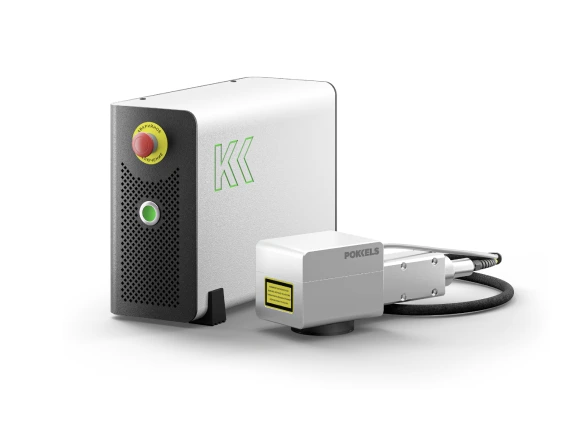
Laser Goods Marking Equipment
Laser marking systems remain the most robust solution for high-volume production environments.
Their accuracy and durability significantly reduce the risk of DataMatrix code damage, making them highly reliable for regulatory compliance.
Inkjet DataMatrix Printers
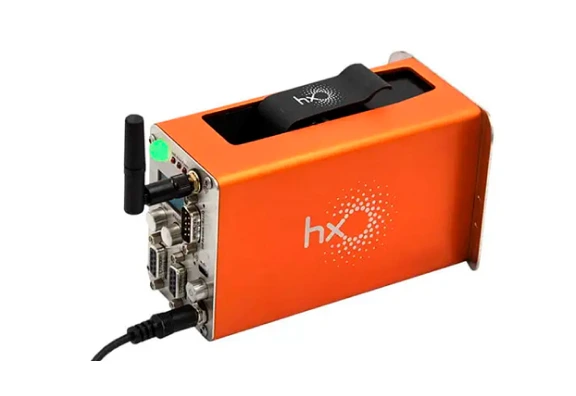
Thermal inkjet printers offer a cost-effective alternative for small and medium-sized manufacturers.
These non-contact systems use heat to apply ink droplets to the surface, making them suitable for a wide range of packaging materials including plastics, laminated sheets, coated cartons, metals, and aluminum cans.

DataMatrix Sticker Printers
For manufacturers seeking flexibility or managing non-automated production lines, sticker printers offer a practical solution. They generate high-quality labels used either for direct product serialization or for aggregation on cases, pallets, and other parent units.
These printers are particularly well-suited for micro and small enterprises thanks to their affordability and ability to print variable data such as unique identifiers, batch numbers, and expiry dates.

Marking Code Reading
DataMatrix Code Scanners
High-performance scanning devices ensure accurate verification of incoming materials and finished goods. They support real-time stock updates and help maintain continuous, error-free production flows.

Mobile Application
A dedicated track and trace mobile application can significantly enhance operational visibility.
By replacing conventional scanners, such apps allow operators to capture DataMatrix codes, access product details, and submit data instantly from the production floor. This supports flexible operations and strengthens integration with enterprise systems and reporting tools.
.webp)
Importers
Importers must ensure that product information is accurately captured at entry points and maintained throughout the logistics chain. Reliable equipment helps prevent errors, improve shipment transparency, and maintain compliance when goods enter the domestic market.
Marking Code Application
DataMatrix Sticker Printers
Importers often rely on label printers to serialize imported goods or apply aggregation labels during sorting and repacking operations. These devices support variable data printing and offer a cost-effective alternative to direct marking.
Marking Code Reading
DataMatrix Code Scanners
Scanning equipment ensures that each incoming unit is registered quickly and accurately, enabling real-time inventory reporting and minimizing discrepancies across customs, warehouse, and distribution systems.

Mobile App
A mobile app provides importers with instant verification capabilities and the ability to manage product information directly during receipt, inspection, and sorting. This reduces reliance on dedicated scanning hardware and supports seamless system integration.
Distributors and Retailers
Distributors and retailers must maintain full visibility over inventory movement to uphold supply chain integrity and comply with withdrawal, recall, and sale-tracking requirements.
For Distributors — Marking Code Application
DataMatrix Sticker Printers
Distributors may also require DataMatrix code printers to support aggregation processes within their warehouses.
During aggregation, individual units are linked to a larger packaging level — such as boxes, cartons, or pallets — using unique labels that ensure each parent container can be accurately tracked throughout the supply chain.
By printing and applying these aggregation labels on-site, distributors can maintain traceability, streamline inventory handling, and ensure compliance with regulatory reporting requirements.
For Distributors and Retailers — Marking Code Reading
Scanning Devices
Fast and accurate scanning systems are essential at receiving docks, storage areas, and checkout points. Scanning a DataMatrix code at the point of sale removes the product from circulation, preventing resale and blocking any item with an invalid or missing code.
Mobile Application
A mobile app equips warehouse and in-store personnel with immediate access to product data, enabling them to manage stock levels, verify authenticity, and update system records on the spot.
Because the app can fully replace traditional scanners and integrate directly with track and trace infrastructure, it also helps reduce operational costs.
For Retailers — API Integration
Retailers can seamlessly comply with track and trace requirements without replacing their existing cash register hardware or software.
A comprehensive track and trace system — for example, traceCORE Digital Track and Trace — provides an API that allows checkout systems to verify each DataMatrix code before completing a sale, ensuring that only valid and authentic products are processed. Retailers simply need to integrate this API and use either a barcode scanner or a mobile application for code validation.
This streamlined approach minimizes operational disruption while strengthening product authenticity checks at the point of sale.
.webp)
Conclusion
The growing body of evidence — from OECD-type countries to developing economies — shows that product marking and associated track and trace systems are among the most effective tools for governments to recover lost tax revenue, fight illicit trade, and support public health.
When well implemented, such systems produce measurable fiscal returns and long-term savings or avoided costs, often outweighing the investment needed to deploy them.
It’s also important to keep in mind that reliable track and trace equipment is a foundational requirement for achieving regulatory compliance and ensuring product authenticity across the supply chain. Market participants must prioritize solutions that offer accuracy, scalability, and seamless integration.
Investing in the right technologies not only supports compliance but also strengthens operational efficiency and transparency — key outcomes for businesses and governments worldwide.
If you’re looking for a reliable track and trace system for your country, make sure to check out traceCORE Digital Track and Trace and learn about its benefits.