
Anti-Money Laundering Platform
Modernizing Financial Crime Prevention with Advanced Anti-Money Laundering Technology

For many governments, money laundering is often discussed as a compliance issue or a financial sector problem. In reality, it is far more than that. It is a direct threat to national revenue, public trust, and economic stability.
Across Africa and other emerging economies, governments are losing billions of dollars every year through illicit financial flows, corruption, trade misinvoicing, and organized financial crime. The impact is not abstract. It translates into fewer schools being built, weaker healthcare systems, delayed infrastructure projects, and reduced public investment capacity.
According to the United Nations Conference on Trade and Development (UNCTAD), Africa loses nearly $89 billion annually to illicit financial flows, which is the equivalent of 3.7% of the continent’s GDP. Even more concerning, those losses exceed the amount many African nations receive in development aid.
The scale of the challenge is staggering. Yet governments today have access to far more advanced tools than ever before to identify suspicious activity, strengthen financial oversight, and recover lost revenue.
In this post, we’ll look at how money laundering impacts government revenue, why traditional anti-money laundering systems are falling behind, and how advanced AML technology can help governments strengthen financial oversight and combat financial crime more effectively.
The Hidden Cost of Financial Crime on Government Revenue
Money laundering is not just about criminal networks hiding illegal funds. It creates a ripple effect that weakens entire economies.
When illicit funds move undetected through financial systems, governments lose taxable revenue, customs duties, foreign exchange reserves, and investor confidence. Trade-based money laundering alone allows corporations and criminal actors to understate or overstate invoice values, siphoning capital out of countries while reducing legitimate tax obligations.
A recent report by the Business and Financial Times found that Ghana alone lost an estimated $54.1 billion over the past decade through illicit financial flows tied largely to trade misinvoicing and money laundering.

For governments already managing debt pressures, infrastructure demands, and public service expansion, these losses can severely limit economic growth. The United Nations Economic Commission for Africa (ECA) has repeatedly warned that illicit financial flows continue to undermine the continent’s ability to finance sustainable development goals.
In practical terms, this means governments are often forced to compensate for lost revenue through increased borrowing, higher taxes, or reduced spending on critical services.
The challenge is also global. The United Nations Office on Drugs and Crime (UNODC) estimates that as much as $1.6 trillion — nearly 3% of global GDP — may be laundered annually worldwide. Yet less than 1% of illicit financial flows are successfully intercepted or frozen.
That gap highlights a hard truth: traditional anti-money laundering systems are no longer sufficient.

Why Legacy AML Systems Are Falling Behind
Many public institutions still rely on fragmented monitoring systems, manual investigations, siloed databases, and reactive compliance processes. These approaches struggle to keep pace with increasingly sophisticated financial crime networks that operate across borders, institutions, and digital channels.
Modern financial crime operations now leverage shell companies, cryptocurrency transactions, complex trade structures, and high-speed digital payments to obscure illicit activity.

At the same time, governments face mounting pressure from international regulators and organizations such as the Financial Action Task Force (FATF) to strengthen AML controls and improve transparency.
Countries that fail to meet these standards risk being placed on international grey lists, which can increase borrowing costs, discourage foreign investment, and disrupt trade relationships.
Recent progress in countries like Nigeria and South Africa demonstrates the value of stronger AML frameworks and interagency coordination. Both nations were recently removed from the FATF grey list after improving oversight, financial intelligence sharing, and anti-money laundering controls.

The message is clear: governments that modernize financial crime prevention systems position themselves for stronger economic resilience and greater investor confidence.
The Role of Advanced AML Technology in Government Transformation
Modern anti-money laundering platforms are transforming how governments detect, investigate, and prevent financial crime.
Instead of relying solely on manual reviews and static rule sets, advanced AML systems use real-time monitoring, artificial intelligence, risk scoring, and automated analytics to identify suspicious patterns much faster and more accurately.
This enables agencies to:
-
Detect high-risk transactions in real time.
-
Identify hidden relationships across entities and accounts.
-
Automate compliance reporting and case management.
-
Strengthen inter-agency intelligence sharing.
-
Reduce false positives and investigative delays.
-
Improve revenue protection and asset recovery efforts.
For governments undergoing digital transformation, AML modernization has become a critical component of economic governance, public accountability, and national security.

Introducing traceCORE Anti-Money Laundering Platform
To effectively combat modern financial crime, governments need technology built specifically for large-scale oversight, regulatory intelligence, and operational efficiency.
traceCORE Anti-Money Laundering Platform helps public sector institutions modernize AML operations through advanced monitoring, automated workflows, and intelligent risk detection capabilities.
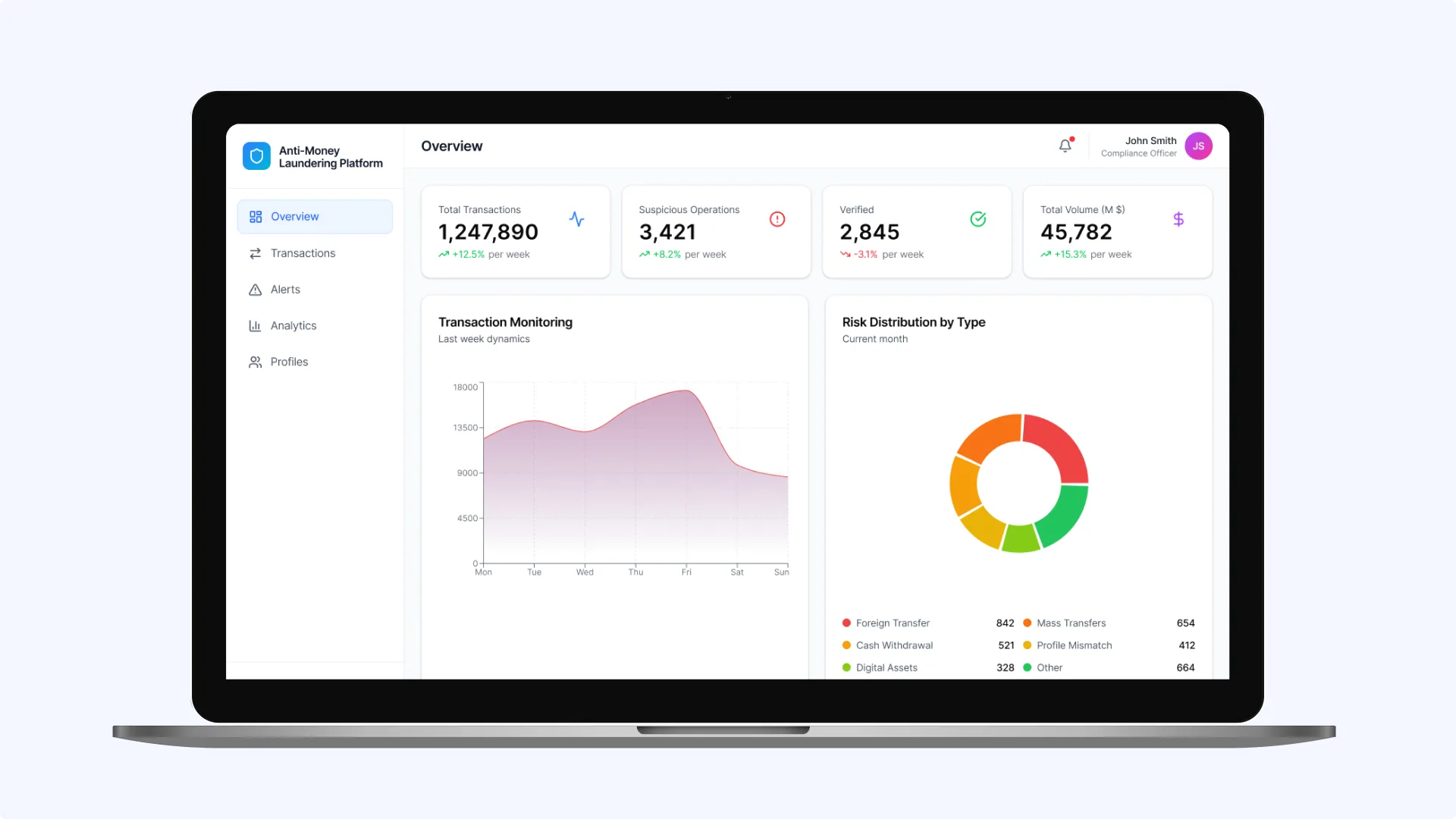
The system automatically detects suspicious activities and classifies them according to risk categories.
Designed to support government agencies, regulators, and financial institutions, the platform enables organizations to move from reactive investigations to proactive financial crime prevention.
With capabilities such as real-time transaction monitoring, sanctions screening, suspicious activity detection, and centralized case management, traceCORE Anti-Money Laundering Platform empowers governments to strengthen compliance while protecting critical revenue streams.
More importantly, it supports a broader vision of digital governance — one where technology improves transparency, strengthens public trust, and enables faster, data-driven decision-making.
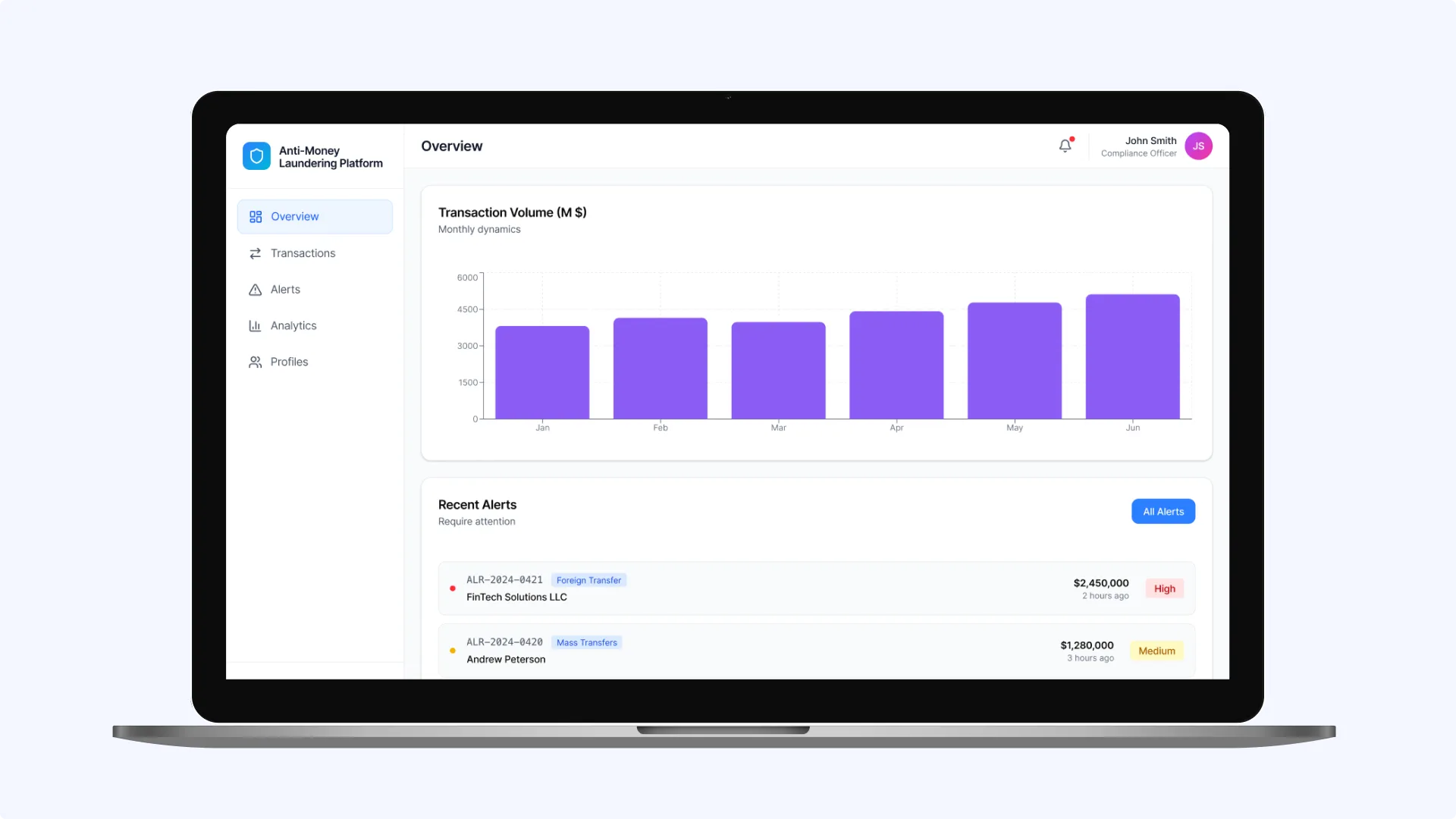
The platform automatically generates structured case files and reports on suspicious activities, reducing manual workload and accelerating compliance and regulatory review.
If you’re currently looking for an effective anti-money laundering system or solutions to combat illicit trade, VAT noncompliance, informal employment, and other challenges that hinder your country’s growth and revenue generation, don’t hesitate to contact traceCORE. We offer a comprehensive ecosystem of digital transformation solutions designed to help governments strengthen compliance, improve transparency, and increase revenue collection.
In case you’re unsure where to begin, our Advisory Support services can help assess your current challenges, identify gaps in your financial oversight processes, and recommend the right technology strategy tailored to your government’s goals.

Building Financial Integrity for the Future
Financial crime continues to evolve rapidly, and governments cannot afford to rely on outdated systems while illicit financial flows drain national economies.
The numbers speak for themselves. Billions of dollars are lost every year across Africa and around the world through money laundering and other illicit financial activities. Those losses directly affect public services, infrastructure investment, and long-term economic development.
Modern anti-money laundering technology offers governments an opportunity not only to improve compliance, but to reclaim financial control, strengthen institutions, and build more resilient economies.
As governments accelerate their digital transformation strategies, advanced solutions like traceCORE Anti-Money Laundering Platform can play a central role in creating a more transparent, secure, and financially accountable future.