
Geo Tax Enforcement System
Leveraging Transaction Analytics to Combat Shadow Economic Activity

The way people pay for goods and services has changed dramatically over the last decade. Mobile wallets, peer-to-peer transfers, and digital payment platforms have become part of everyday life, offering greater convenience and expanding access to financial services.
For governments, however, this transformation brings new challenges. As commerce increasingly moves into digital channels, a growing share of business transactions can occur outside traditional oversight mechanisms. Small merchants, service providers, and informal businesses may receive payments through personal wallets or P2P services, making commercial activity difficult to distinguish from ordinary personal transfers.
As a result, tax authorities face a familiar problem in a new form: the shadow economy adapting to the digital age.
To respond, governments are turning to a new generation of analytical tools capable of transforming large volumes of transaction data into actionable intelligence. Among the most promising approaches is the use of transaction analytics and geospatial intelligence to identify patterns that may indicate unregistered commercial activity.
In this post, we'll look at how transaction analytics is helping tax authorities uncover hidden economic activity and why platforms like traceCORE Geo Tax Enforcement System are becoming essential tools for modern revenue administration.
The Hidden Cost of Unregistered Economic Activity
The shadow economy is not a new challenge, but in the digital age it is becoming increasingly difficult to detect. As more transactions move to mobile wallets, peer-to-peer payment platforms, and other digital channels, governments face growing pressure to ensure that economic activity remains visible, taxable, and subject to appropriate regulatory oversight.
The scale of the issue is significant. According to the International Monetary Fund (IMF), informal economic activity accounts for approximately one-third of GDP in many developing economies and remains a substantial component of economic activity even in advanced markets. Globally, more than 2 billion people — around 60% of the world's employed population — work in the informal economy, creating enormous challenges for tax collection, economic planning, and public revenue generation.
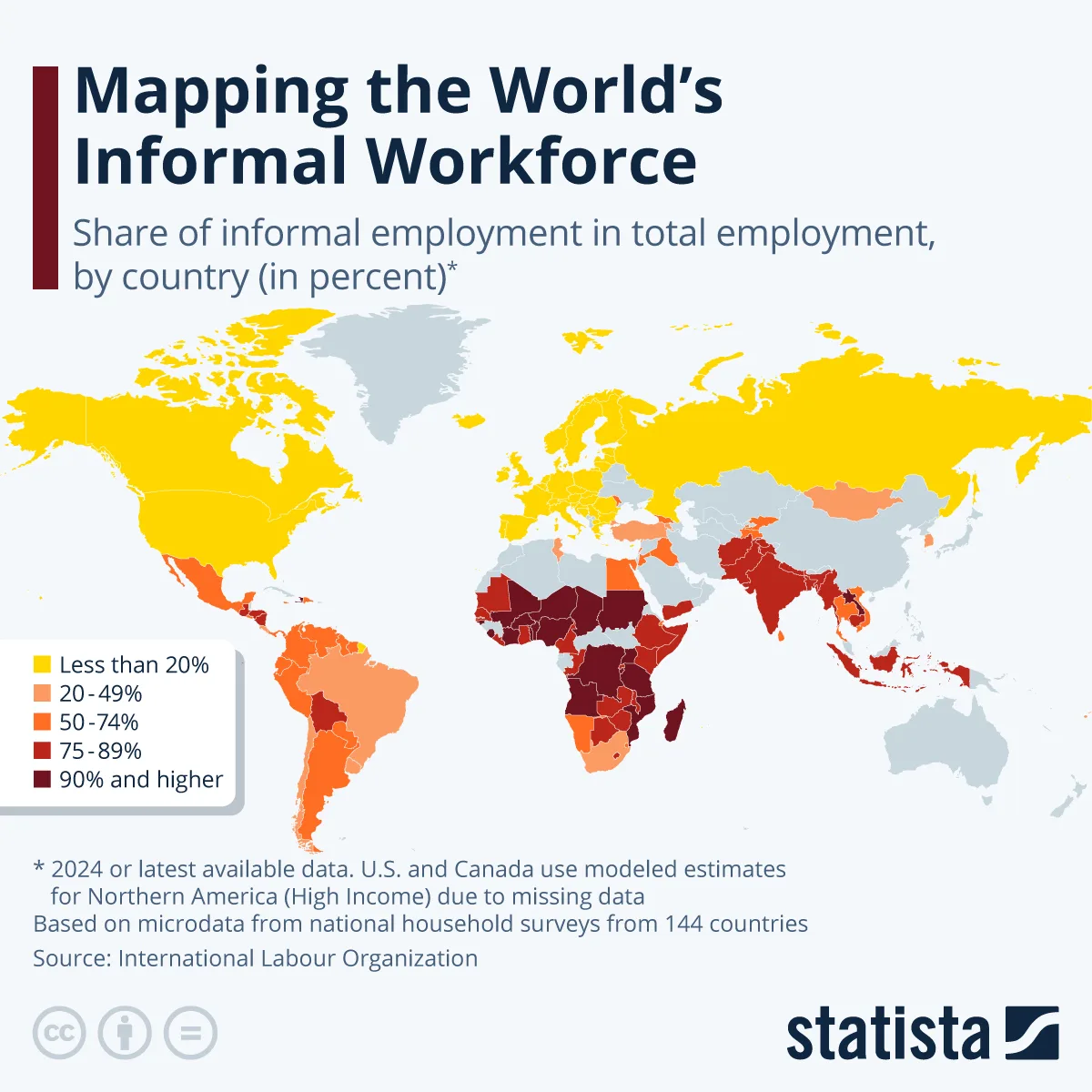
The budgetary impact can be staggering. For example, countries across Africa collectively lose more than $125 billion annually due to illicit financial flows, tax avoidance, and economic activity operating outside formal systems, according to Africa Tax Review. To put that figure into perspective, these resources could otherwise be invested in critical infrastructure, healthcare, education, social services, and digital government transformation initiatives.
As governments seek to strengthen fiscal sustainability, reduce dependence on borrowing, and fund increasingly ambitious public service agendas, improving visibility into hidden economic activity has become a strategic priority. The challenge is no longer limited to cash-based informal markets. Today, a growing share of unregistered commercial activity occurs through digital financial channels, requiring tax authorities to adopt advanced analytical techniques capable of identifying patterns that traditional compliance mechanisms often miss.
This is where transaction analytics and geospatial intelligence are emerging as essential tools for modern tax administrations.

Turning Transaction Data into Economic Intelligence
Modern tax authorities are no longer limited to periodic reporting or retrospective audits. Instead, they are increasingly leveraging real-time transaction analytics to better understand how money moves through digital ecosystems.
By analyzing payment flows across mobile wallets, P2P platforms, and digital banking channels, governments can begin to identify behavioral patterns that may indicate unregistered or underreported economic activity.
For instance, repeated small-value transfers between the same parties, unusually high transaction frequency within specific geographic areas, or mismatches between declared income and observed financial behavior can all serve as early indicators of informal commercial activity. On their own, these signals may not be conclusive, but when analyzed collectively, they provide a powerful lens into the structure of the shadow economy.

Introducing Geo Tax Enforcement Systems as a New Analytical Layer
To move from fragmented insights to actionable intelligence, governments are increasingly adopting integrated geo tax enforcement solutions. These platforms combine financial transaction monitoring with geospatial and behavioral analytics to create a more complete picture of economic activity.
At their core, geo tax enforcement systems are designed to continuously monitor and analyze transactions across digital channels, while also mapping where economic activity is taking place. This combination of “who is transacting” and “where it is happening” helps uncover patterns that would otherwise remain hidden in isolated datasets.
Instead of treating transactions as standalone events, the system contextualizes them within broader behavioral and geographic frameworks. This shift enables tax authorities to detect anomalies more accurately and focus enforcement efforts where they are most needed.

How Geo Tax Enforcement Solutions Support Smarter Tax Enforcement
When implemented effectively, a geo tax enforcement platform can significantly enhance a government’s ability to identify and address shadow economic activity. It supports tax authorities in spotting undeclared business operations, prioritizing audits based on risk, and improving the overall accuracy of revenue forecasting.
Equally important, it strengthens transparency in digital financial ecosystems, helping ensure that legitimate businesses operate on a level playing field while reducing opportunities for systemic non-compliance.
Rather than relying on manual investigations alone, enforcement teams gain access to data-driven insights that guide decision-making. This allows for more efficient resource allocation and more consistent enforcement outcomes.

Responding to Challenges with traceCORE Geo Tax Enforcement System
traceCORE Geo Tax Enforcement System was developed specifically to the emerging challenges governments face when it comes to tracking unregistered commercial activity.
Combining transaction intelligence, behavioral analytics, geospatial analysis, and automated risk assessment, the platform provides tax authorities with the tools needed to identify hidden commercial activity operating through digital financial channels. Rather than relying solely on traditional enforcement methods, governments can leverage data-driven insights to improve compliance, increase revenue collection, and reduce the size of the shadow economy.
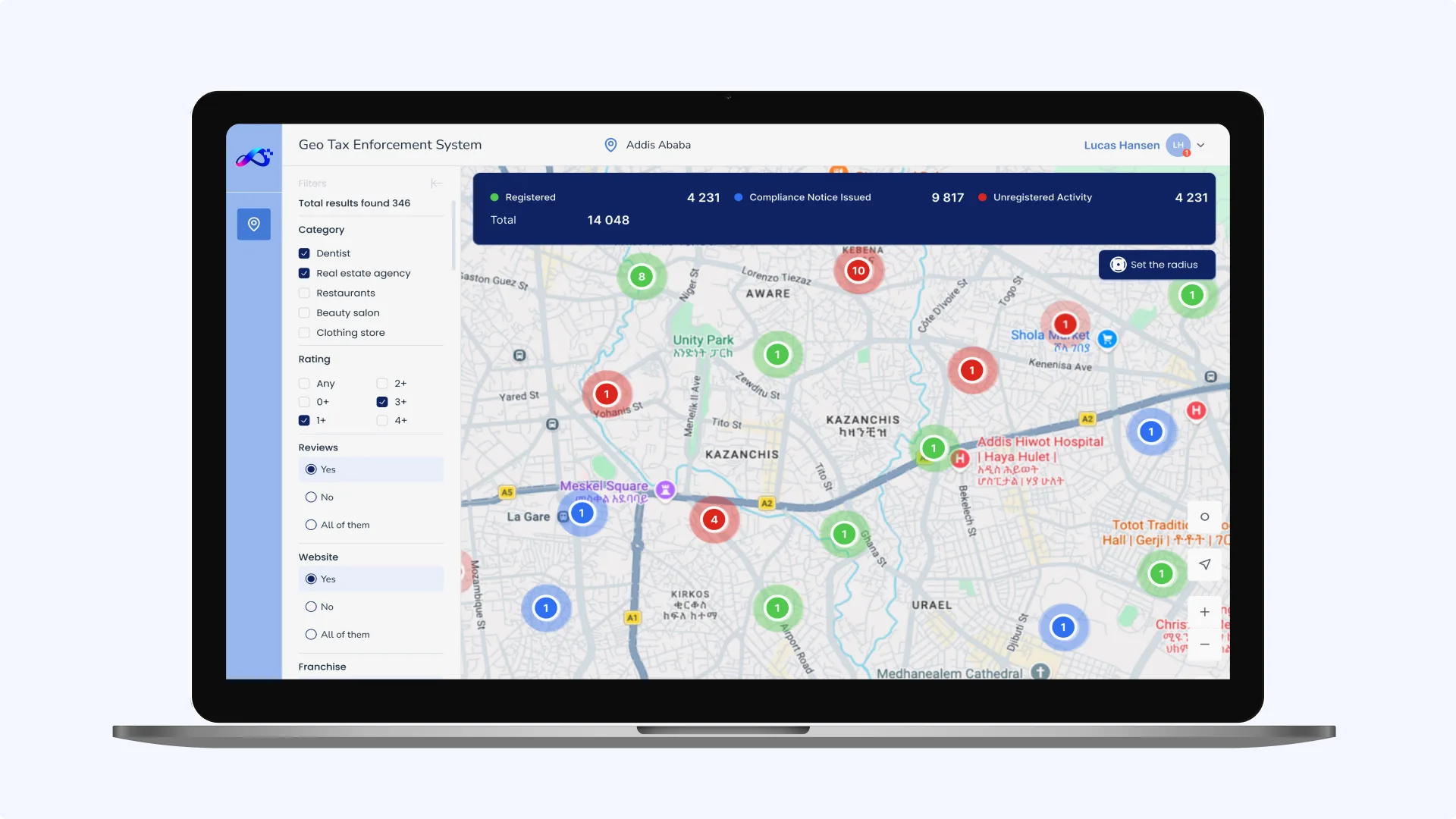
The system automatically identifies potential sources of unregistered commercial activity and highlights them for immediate review.
Designed for government environments, the solution supports secure integration with telecommunications operators and other authorized data sources while maintaining compliance with applicable privacy, confidentiality, and information protection requirements.
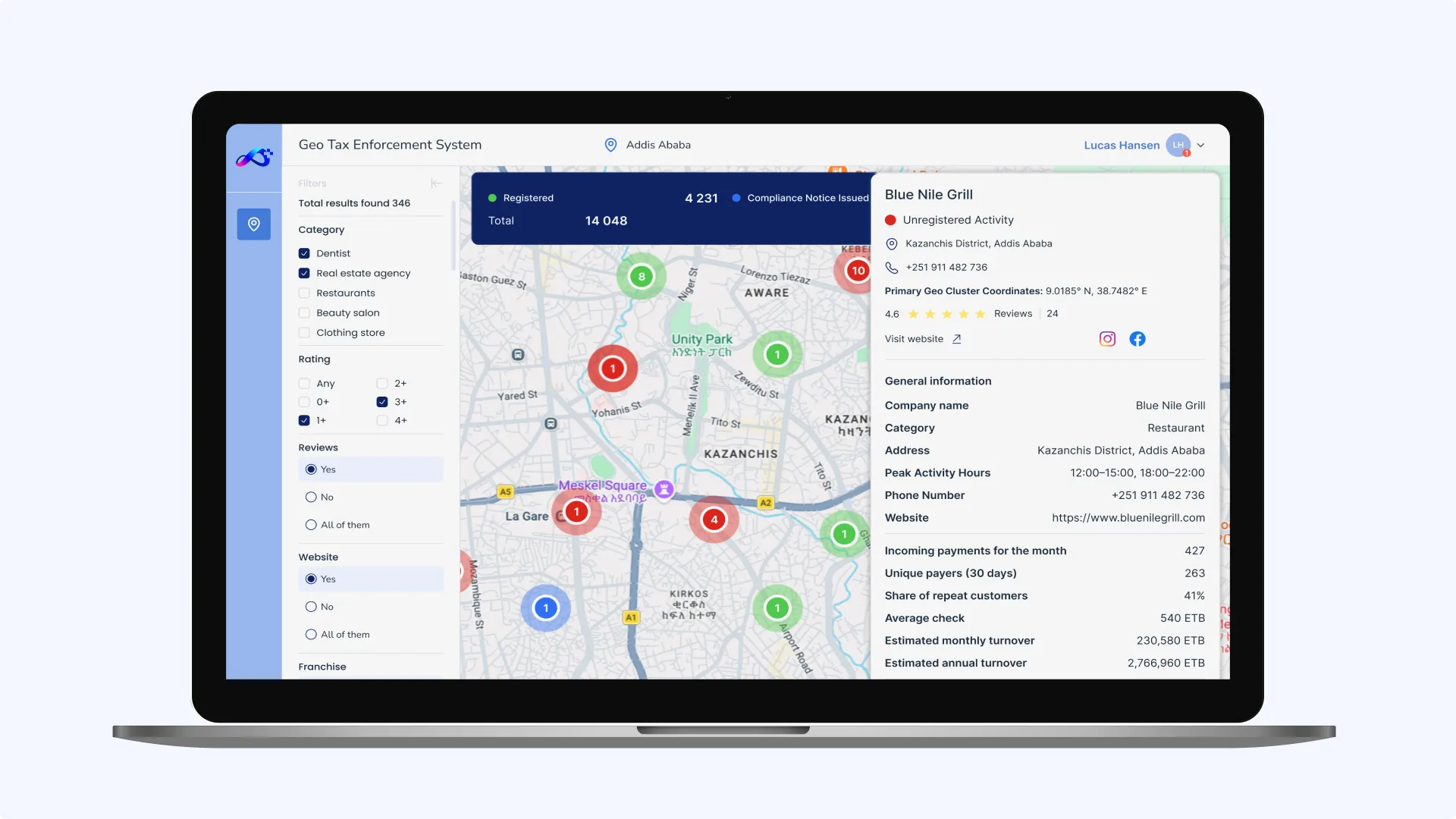
By clicking on any identified commercial location on the map, investigators can access detailed information, including registration data, indicators of commercial activity (transaction frequency, volume, geolocation, and behavioral patterns), estimated income for the selected period, and an assessment of the potential taxable base.
As digital economies continue to expand, solutions such as traceCORE Geo Tax Enforcement System provide governments with a practical and scalable approach to strengthening tax transparency and ensuring that economic growth remains visible, measurable, and equitable.
If you’re looking into digital transformation solutions for your country and where to start from, you can check out traceCORE Advisory Support services that will help you define a clear modernization roadmap, identify high-impact use cases, and translate strategic goals into practical, scalable implementations tailored to your public sector environment.

Conclusion
As digital economies continue to evolve, the challenge of monitoring informal and unregistered economic activity will only grow more complex. Traditional tax enforcement approaches, while still important, are no longer sufficient on their own to address the scale and speed of modern digital transactions.
Geo tax enforcement systems represent a practical and scalable response to this challenge. By combining transaction analytics with geospatial intelligence, governments gain a clearer, more dynamic understanding of economic activity across digital ecosystems.
Digital solutions like the traceCORE Geo Tax Enforcement System are helping public institutions move toward a more proactive, data-driven model of tax enforcement — one that improves transparency, strengthens compliance, and ultimately supports more resilient public finances.