Illegal rentals rarely make headlines on their own. There’s no flashing warning sign that a property is operating outside the rules. And yet, for governments, their impact is very real — and often deeply felt.
As rental markets grow more complex and digital platforms make it easier than ever to list a property, governments are increasingly asking an important question:
What really happens when rentals operate outside the regulatory system — and how can we regain visibility and control without overburdening staff or residents?
In this post, we’re going to break it down.
A Closer Look at the Hidden Costs Behind Illegal Rentals
For many governments worldwide, rental activity represents a meaningful source of public revenue. Registration fees, personal income tax, lodging taxes, occupancy taxes, and licensing costs all support essential services.
When rentals operate illegally — meaning they’re unregistered, underreported, or entirely invisible — that revenue simply doesn’t arrive.
The challenge isn’t just lost income. It’s how unpredictable the situation is.
Without accurate insight into how many rentals exist, where they operate, and how often they’re occupied, governments are forced to plan budgets with incomplete information.
Over time, this can lead to:
-
Funding gaps for infrastructure and public services
-
Increased pressure to raise taxes elsewhere
-
Reduced confidence in regulatory systems
Illegal rentals quietly erode financial stability. It’s not about a single dramatic loss, rather than consistent undercollection.
Housing Policy Suffers Without Visibility
Housing affordability is one of the most pressing issues facing governments today. Illegal rentals often sit right at the center of that conversation.
When residential units shift into unregistered short-term or non-compliant rental use, governments may not realize how much long-term housing stock has been removed, which neighborhoods are most affected, and whether existing regulations are actually working.
This lack of visibility makes it incredibly difficult to design effective housing policy. You can’t manage what you can’t measure — and illegal rentals thrive in those blind spots.

Community Impact and Public Safety Concerns
From a resident’s perspective, illegal rentals can change the character of a neighborhood almost overnight.
Increased noise complaints, parking congestion, waste management issues, and safety risks often follow properties that aren’t inspected or regulated. For governments, this means more calls to enforcement teams, more strain on inspection departments, and more reactive responses instead of proactive planning.
The issue isn’t that rentals exist — it’s that unregistered rentals operate outside the systems designed to protect both guests and communities.
An Uneven Market for Compliant Landlords
There’s another group affected by illegal rentals that’s often overlooked: compliant property owners.
Landlords who follow the rules — registering their properties, meeting safety standards, paying required taxes — expect a level playing field. When illegal rentals avoid those obligations, it creates unfair competition, reduced compliance incentives, and frustration with government oversight.
Over time, this can weaken trust in regulatory frameworks altogether.
The Core Problem: Fragmented or Missing Data
At the heart of every issue tied to illegal rentals is one shared challenge: data fragmentation.
Governments may have partial information scattered across departments — licensing, taxation, housing, enforcement — but no single, reliable source of truth.
Without a centralized rental registration system, officials are left asking:
-
How many rentals are operating today?
-
Which ones are compliant?
-
Which ones require action?
-
Where should resources be focused?
These questions shouldn’t be hard to answer. However, without the right tools, they often are. That leads us to the next point: is there a way to solve this problem that can benefit both the governments and citizens?
traceCORE Rental Registration System — A Smarter, More Sustainable Solution
Addressing illegal rentals doesn’t require heavier enforcement alone. It requires better systems.
traceCORE Rental Registration System is designed specifically to help governments bring clarity, structure, and accountability to rental markets — without adding unnecessary administrative burden.
Instead of reacting to complaints or chasing missing data, governments gain a proactive, digital foundation for rental oversight.
The results? Better compliance, higher data quality, and promising outcomes for communities.
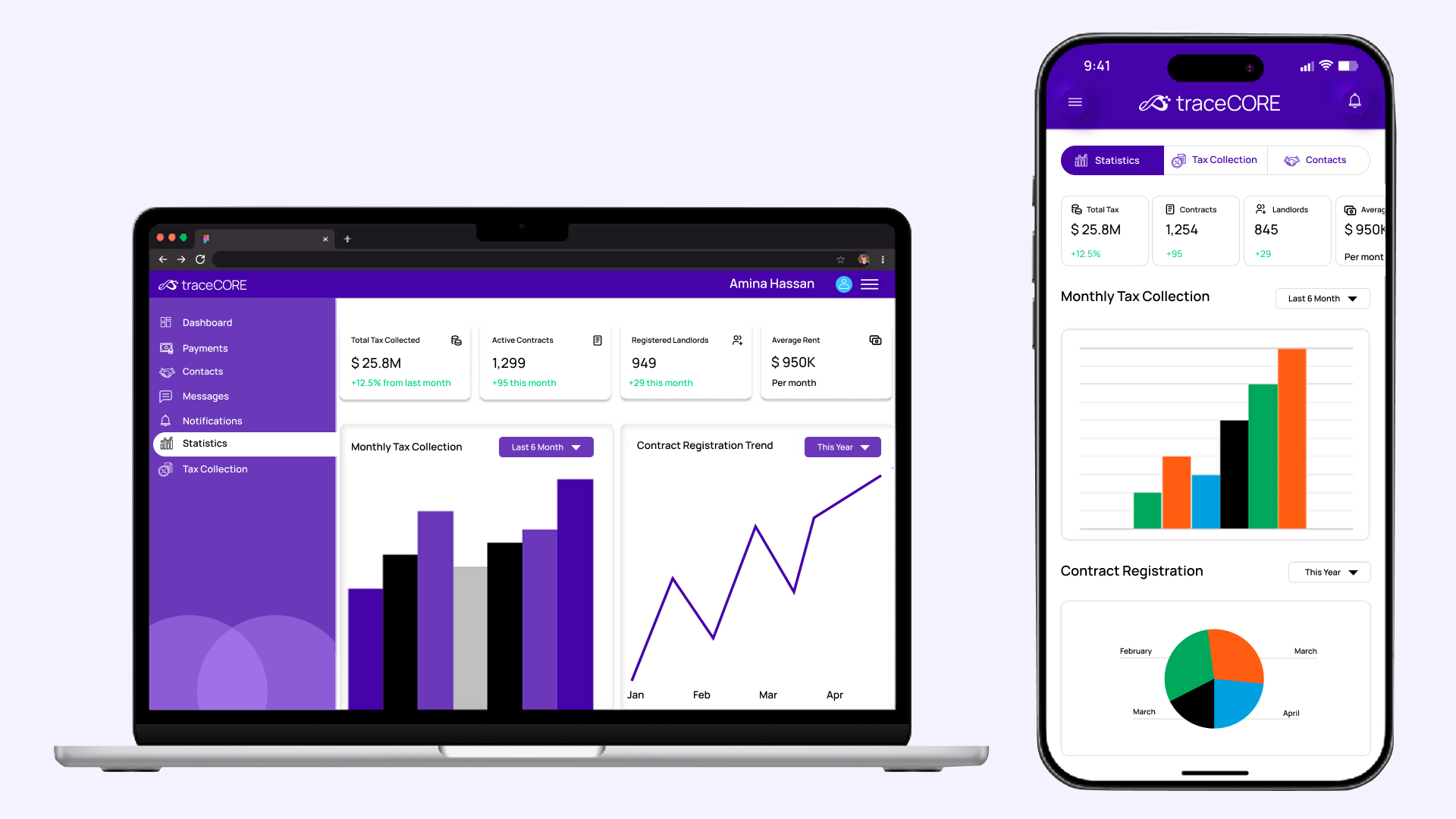
Visit this page to learn more about traceCORE Rental Registration System.
Key Benefits of traceCORE Rental Registration System
A well-designed rental registration system does more than digitize paperwork — it strengthens trust, boosts public revenue, and creates a fairer housing market for all stakeholders. Here’s how it makes a meaningful impact:
.webp)
Increasing Government Revenue
By ensuring that all tenant contracts are officially registered, the system enables governments to collect additional, previously unrecorded revenues.
This not only strengthens public finances but also helps fund essential services and infrastructure.

Protection of Tenants’ Rights
Registered contracts provide tenants with legal protection and peace of mind.
In the event of disputes, tenants can rely on recognized dispute resolution mechanisms, ensuring fair treatment and access to justice.

Enhanced Transparency and Accountability
When rental agreements are formally registered and recognized by government authorities, transparency becomes the norm.
Both landlords and tenants operate within a clear legal framework, reducing disputes and fostering accountability on all sides.
Standardized Contract Renewal and Termination
The system introduces clear, standardized procedures for renewing or terminating rental contracts.
This ensures that both parties fully understand their rights and responsibilities well in advance of contract expiration, minimizing uncertainty and last-minute conflicts.

Compliance with Local Regulations
All registered rental agreements are automatically aligned with local laws and regulations.
This helps prevent the use of properties that do not meet required safety, zoning, or occupancy standards — protecting communities and residents alike.
Efficient Utility Connections
With verified rental agreements in place, tenants can quickly and easily set up essential services such as electricity, water, and the internet.
This streamlines the move-in process and ensures a smoother transition into the property.
Conclusion
Illegal rentals are often treated as a compliance problem. While that is true, it’s important to keep in mind that they’re also a policy opportunity.
With the right registration system in place, governments can strengthen housing strategies, improve public safety, ensure fair economic participation, and restore trust in regulatory processes.
traceCORE Rental Registration System helps transform rental oversight from a reactive task into a strategic asset — one that supports smarter governance and more resilient communities.